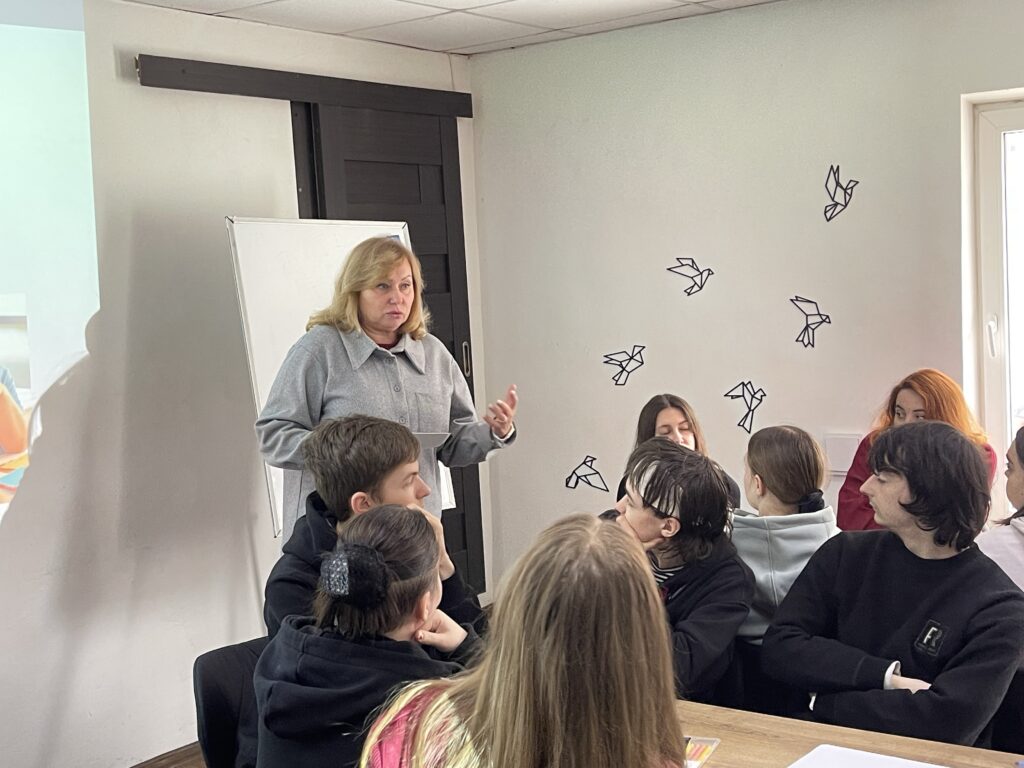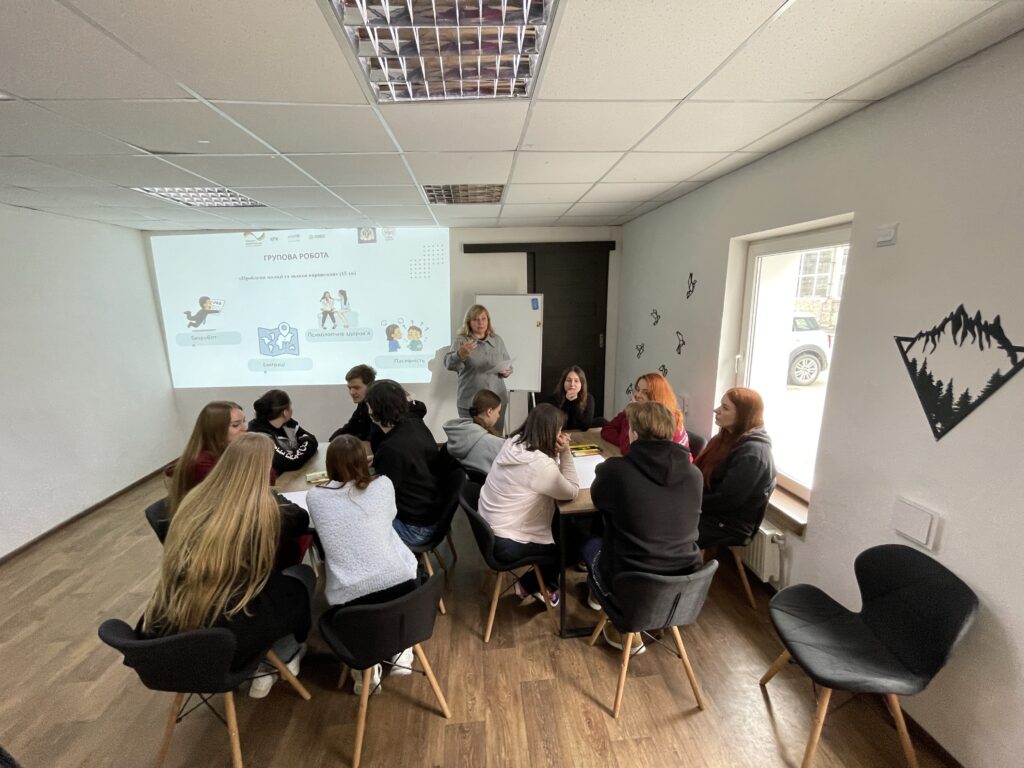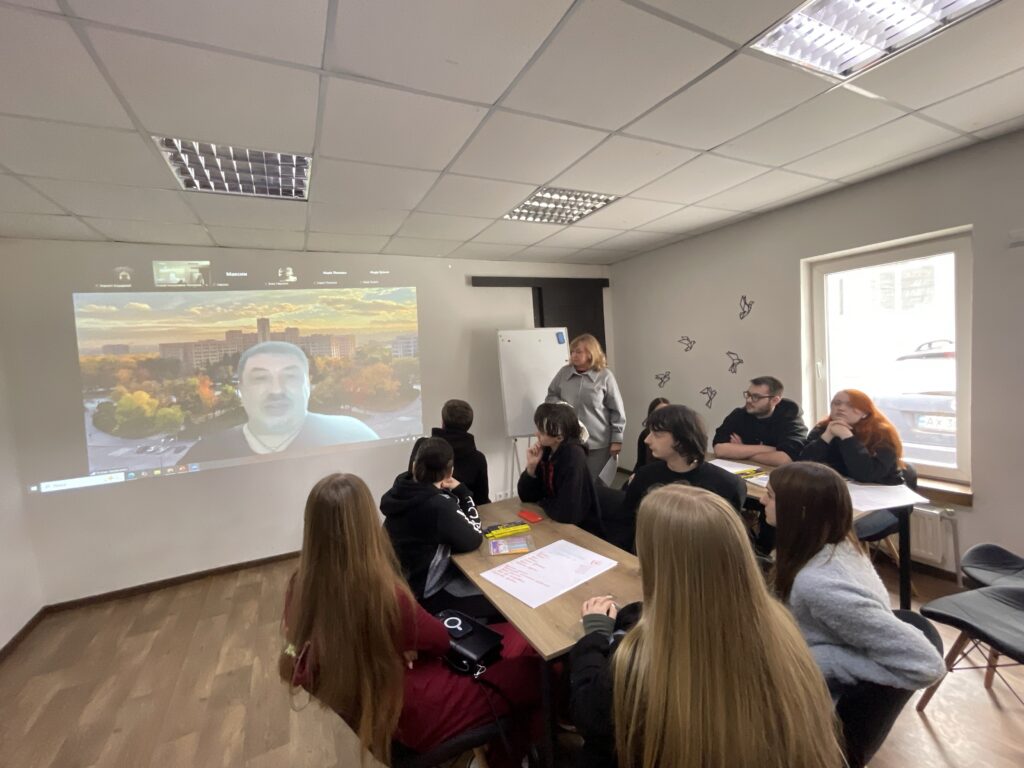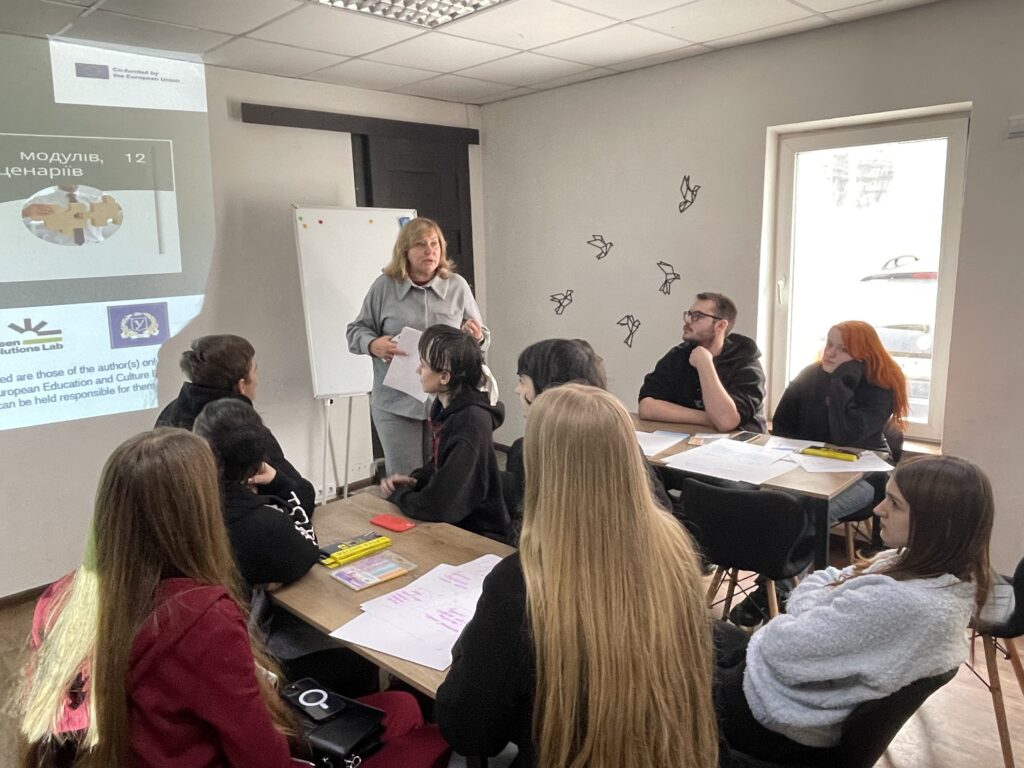
An interactive presentation of the international ResilientMind project was held at the student co-working space of the Educational and Scientific Institute “Ukrainian Engineering and Pedagogical Academy” of V. N. Karazin Kharkiv National University. The event took place as part of a class on “Youth Policy and Youth Work in Ukraine: How to Create Opportunities for Young People.”
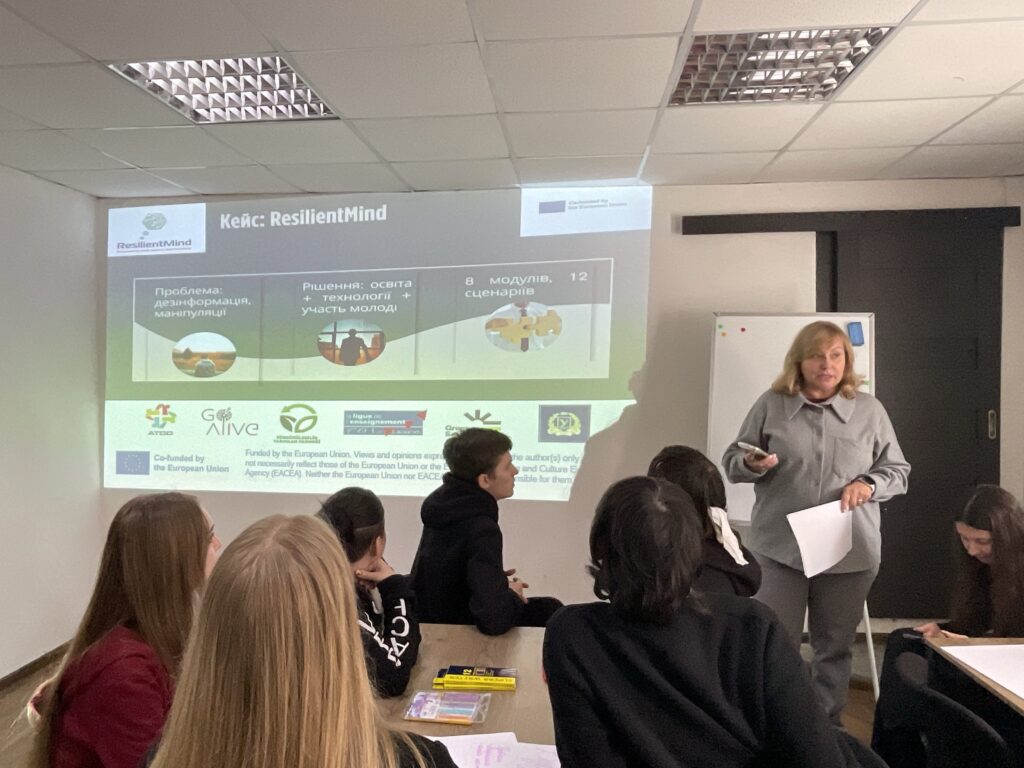
The presentation was delivered by representatives of the Centre for Innovative Educational Technologies: Maryna Vasylieva, Coordinator of the Centre, Deputy Director of the Institute, Doctor of Pedagogical Sciences, Professor; and Roman Nesterenko, trainer in social entrepreneurship and creativity development, expert in internationalisation and project activities, Deputy Head of the International Relations Office of V. N. Karazin Kharkiv National University.
About 30 participants joined the event in a mixed format — both offline and online. During the meeting, they learned about the aim and key objectives of the international ResilientMind project, which is focused on developing young people’s critical thinking, media literacy, and resilience to disinformation, manipulation, and psychological influence in the digital environment.
Special attention was paid to the project objectives, including raising young people’s awareness of the mechanisms of disinformation, developing skills in information analysis and identifying manipulative messages, strengthening the ability to make informed decisions, and supporting young people in acquiring practical competences for safe and responsible behaviour in the information space.
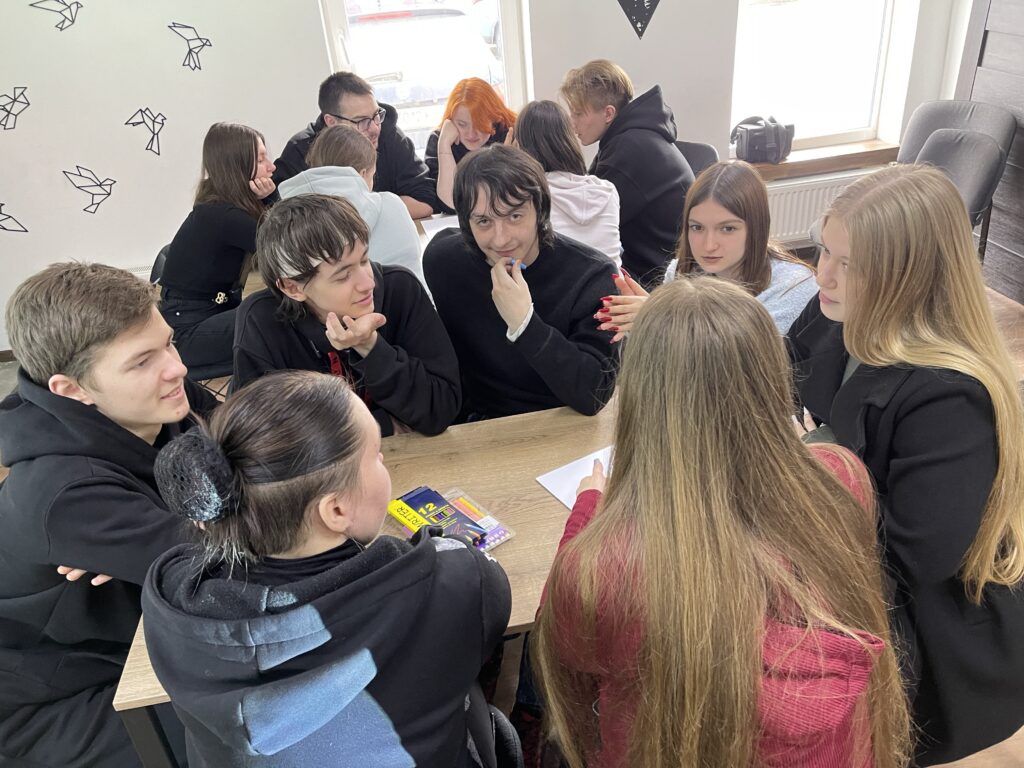
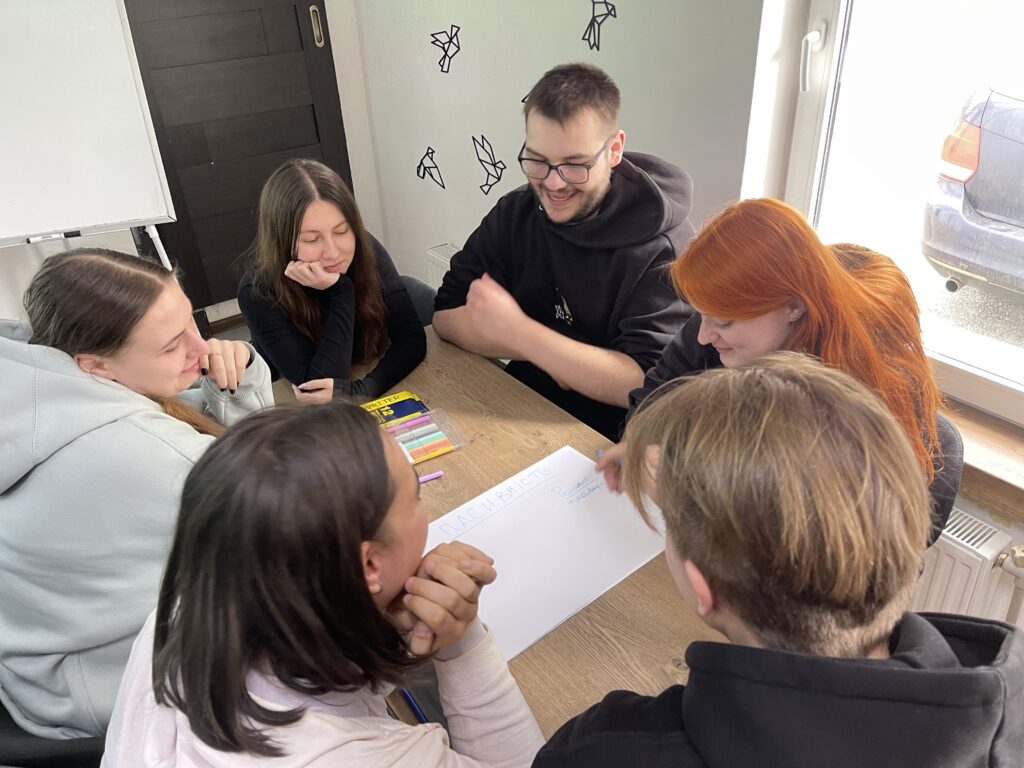
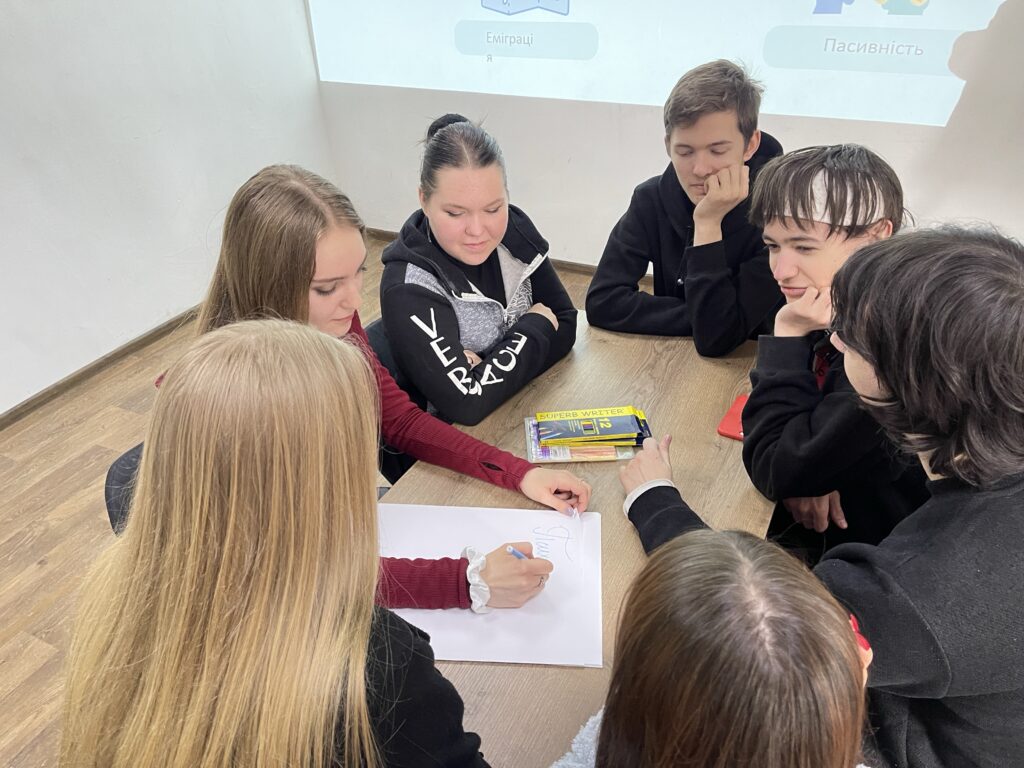
An important objective of ResilientMind is also the creation of an interactive online platform with individual learning pathways. This platform will help young people deepen their knowledge in the areas of digital literacy, critical thinking, resistance to manipulation, and personal resilience. A separate focus of the project is placed on the active role of young people as co-creators of educational content, participants in practical activities, and future agents of change in their communities. The practical part of the class was organised in the format of group work. Participants analysed current challenges faced by young people today, including unemployment, emigration, mental health issues, low levels of civic engagement, the impact of information overload, and the need for quality opportunities for self-realisation.
This discussion was directly connected with the objectives of the ResilientMind project, as the development of critical thinking and resilience to manipulation is impossible without understanding the real social context in which young people live. Therefore, participants not only discussed information threats but also looked for ways to support young people through education, communication, participation in civic initiatives, and the development of youth leadership.
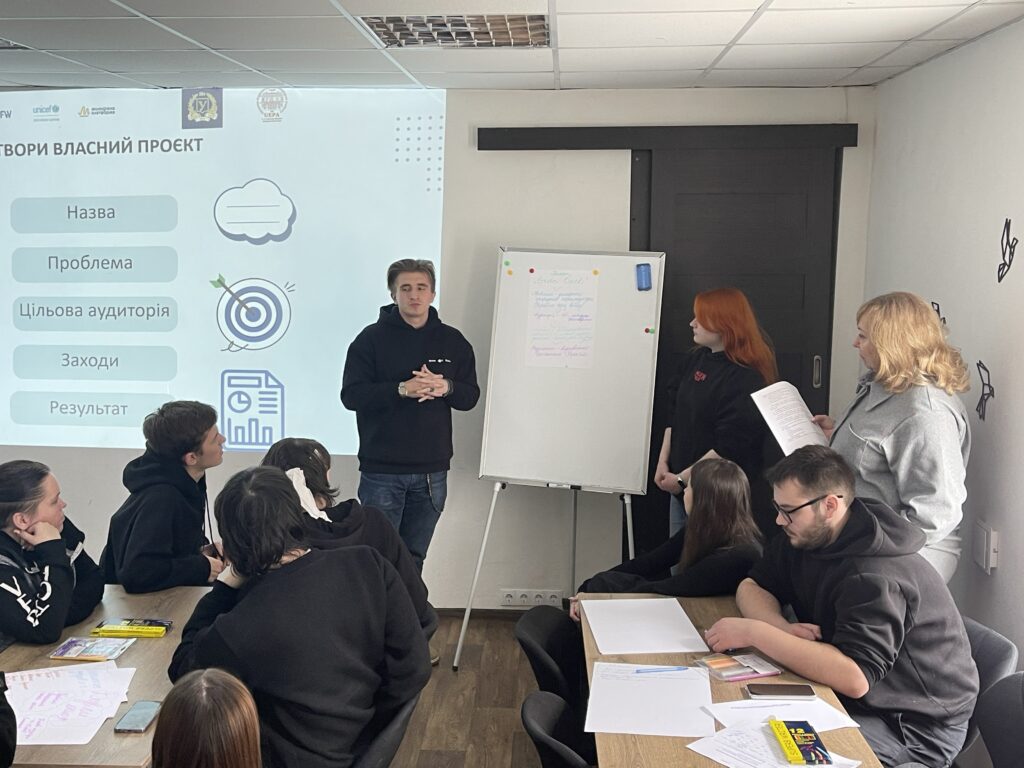
Particular interest was generated by the exercise on creating youth initiatives. Teams developed and presented project ideas aimed at promoting leadership, volunteering, career counselling, mental health support, civic engagement, and youth participation in community life. This format enabled participants not only to discuss current problems but also to propose concrete solutions aligned with the project’s idea — transforming young people from passive consumers of information into active participants in social change.
The event concluded with a reflection session, during which participants shared their impressions, identified key insights, and discussed opportunities to apply the knowledge gained in real life. Most participants noted the practical value of the class, the relevance of the topic, and the importance of developing critical thinking skills in the context of today’s information challenges.
Such events contribute to the implementation of the ResilientMind project objectives, in particular the development of young people’s information resilience, teamwork skills, initiative, responsible attitudes towards information, and readiness to act in the interests of their communities. At the same time, they open up new opportunities for students to participate in international educational projects and strengthen the role of Karazin University as a space for youth development, innovation, and socially significant change.